

EU Mobility Package: what has changed since its implementation, and how often do carriers face penalties?





The Mobility Package is a major reform initiative by the European Union aimed at regulating and harmonizing road freight transport within the EU. It includes a series of legislative changes designed to improve working conditions for drivers, enhance road safety, and promote fair competition among transport companies. The Mobility Package was adopted by the European Parliament and the Council in July 2020 and comprises three major implementation phases gradually introduced between 2020 and 2023.
Why did the EU adopt the Mobility Package?
The primary reason for creating the Mobility Package was to improve the working conditions of truck drivers, ensure compliance with social regulations, and harmonize competition in the European transport market. Before the package's introduction, there were significant differences in regulations and their enforcement across member states, leading to unequal competition and exploitation of drivers. The Mobility Package aims to strengthen the social dimension of the internal market, enhance road safety, and improve the efficiency of transport infrastructure.
Phases of the Mobility Package implementation
The EU Mobility Package was implemented in three phases:
- Mobility Package 1 - July 2020: The first provisions came into force, including new regulations on the return obligations of drivers and vehicles to their home base, changes to rest periods, measures to combat illegal cabotage, and protection against letterbox companies. Additionally, the rules on the use of tachographs were updated to allow better control of driving and rest periods.
- Mobility Package 2 - February 2022: In this phase, further regulations were introduced concerning market access and cabotage. It was stipulated that vehicles must return to their home country at least every eight weeks, and new requirements for tachographs to record border crossings were established. There were also requirements regarding the minimum wage of drivers based on the regulations of the country where they work.
- Mobility Package 3 - May 2023: The final phase focuses on introducing the new version of the digital smart tachograph (Version 2), which allows even more accurate recording of driving and rest times as well as border crossings. These changes aim to further improve compliance with regulations and increase transparency.
Mobility Package 2020: the start of the reforms
- Driver return obligation every 4 weeks:
Since July 2020, truck drivers must return to their home base or company headquarters every four weeks. This regulation aims to improve working conditions and reduce drivers' social isolation.
Results: This measure has led to better planning of driving times and routes by transport companies, which in turn may cause higher operating expenses.
- Prohibition of regular weekly rest in the driver’s cabin:
Furthermore, since July 2020, drivers are not allowed to spend their regular weekly rest period (45 hours or more) in their vehicle cabins. Employers are required to provide drivers with adequate accommodation with sufficient sleeping and sanitary facilities.
Results: This regulation increases costs for companies since they must provide accommodation for drivers. However, it has also helped improve the rest and well-being of drivers.

Mobility Package 2022: deepening regulations
- Vehicle return obligation every 8 weeks
Since February 2022, all vehicles must return to the company base at least once every eight weeks. This regulation aims to prevent the creation of “letterbox companies” and ensure that companies operating in a country are also registered there.
Results: The return obligation has led to increased control over vehicle movements and more effective market management. - Introduction of digital tachographs for recording border vrossings
The use of digital tachographs for accurately recording border crossings became mandatory from February 2022. This helps ensure compliance with minimum wage laws in various countries and monitor drivers' working hours.
Results: Better traceability and transparency of drivers' times and locations, as well as increased protection against manipulation.
Mobility Package 2023: increased transparency and control
- Introduction of the second-generation smart tachograph
From May 2023, all new trucks must be equipped with a second-generation smart tachograph. This technology enables more precise recording of driving times, rest periods, and border crossings.
Results: Improved compliance with driving and rest periods through automated monitoring and a reduction in violations. - New cabotage rules and 4-day waiting period
The new cabotage rules stipulate that after three domestic trips within seven days, a waiting period of four days must be observed before further trips can be made in the same country.
Results: Protection of local transport markets and reduction of abuse cases in cabotage transport.
Mobility Package 2024: new measures and regulations
- Increase in minimum insurance amounts
As of January 2024, the requirements for minimum insurance amounts for trucks have been increased. The minimum coverage amount is now 18 million euros for the first vehicle and 900,000 euros for each additional vehicle.
Results: This measure aims to minimize financial risks and strengthen the financial stability of transport companies.
- Expansion of data storage in digital tachographs
From December 2024, digital tachographs must store data on driving and rest times for the past 56 days. This provides authorities and companies with more accurate monitoring and control of working hours.
Results: Increased control and transparency in monitoring drivers' hours and a reduction in violations of working time regulations.
EU Mobility Package 2025: new laws for trucks
The first part of the Mobility Package is nearing completion, with new regulations that must be fully implemented by August 2025. Particularly relevant are the changes regarding the 56-day proof requirement, new legislation for truck drivers, and the requirements for using new smart tachographs.
- 56-day proof requirement
From August 2025, all truck drivers must fulfill the 56-day proof requirement for driving and rest times, as well as for complying with the return obligation. This means that drivers and transport companies are required to retain records of driving and rest times for the past 56 days and present them to the authorities in case of an inspection. This measure aims to prevent manipulation and violations of applicable regulations, thereby improving road safety and drivers' working conditions.
- Smart tachographs
A key innovation of the Mobility Package is the introduction of the second-generation smart tachographs in all trucks. These must be installed in all vehicles engaged in international transport from August 2025. The new generation smart tachograph offers more precise monitoring functions, such as the automatic recording of border crossings and cabotage trips. This enables better control of cabotage regulations and contributes to compliance with the Mobility Package's cabotage rules.
- New fines for non-compliance with regulations
Failure to comply with the new regulations of the EU Mobility Package will result in new fines. Companies that do not meet the proof requirement or the requirements for using the new smart tachographs will face substantial fines. The goal is to minimize violations and ensure compliance with driving and rest times under the new truck law.
Conclusion
The EU Mobility Package for trucks is an important step towards reforming road freight transport in Europe, aiming to improve working conditions for drivers, ensure fair competition, and enhance road safety. The gradual introduction of the new regulations allows companies and authorities to adapt to the stricter rules. Important innovations such as the introduction of smart tachographs and expanded proof requirements contribute to greater transparency and safety.
For transport companies, it is essential to prepare for the changes to avoid violations and resulting fines. The EU measures promote social justice and fair competition in the transport sector and benefit both drivers and companies. Overall, the Mobility Package contributes to a more sustainable and safer transport sector in the European Union.

Useful info updates via Telegram Subscribe to the Telegram Bot and get:
- Current news about the traffic situation in Germany
- Emergency help for your truck - just send HELP to the bot
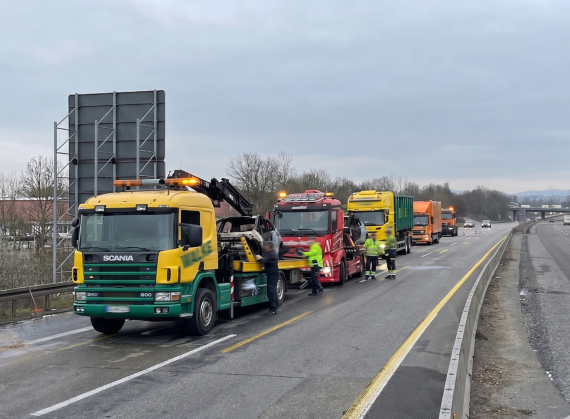 Truck Breakdown and Heavy Recovery in Germany: How Fleet Managers Can Control Towing, Recovery and Costs
 A truck breakdown in Germany is rarely just a technical problem. For fleet managers and dispatchers, it immediately creates a…
Read more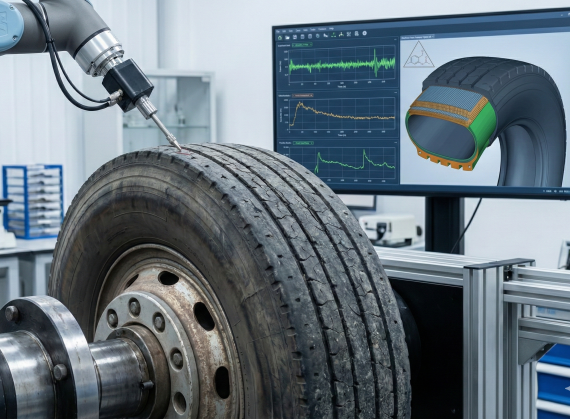 Thermodynamics and tribology of tyre aging: mechanisms of heat generation and structural degradation
 1. Introduction: the tyre as a thermodynamic systemA pneumatic tyre is a sophisticated composite structure designed to operate under extreme…
Read more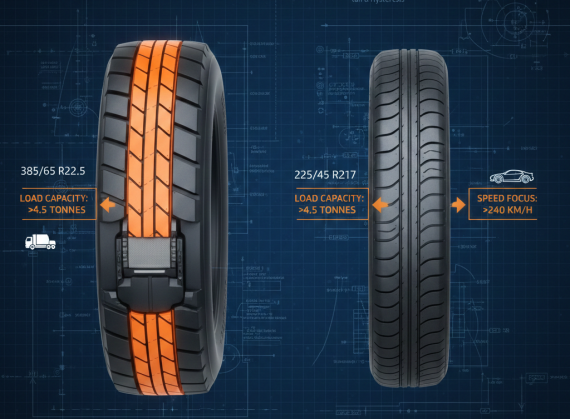 Truck vs Passenger Tyres: Structural Differences, Production Logic, and Regulatory Framework
 Physico-Chemical Foundation: the process mechanismthe operation of any pneumatic tyre is based on the phenomenon of hysteresis, which is a…
Read more