

Truck driver shortage - causes and risks





Truck driver shortage in Europe represents a significant challenge for the logistics industry, impacting the entire economy. Many countries around the world lack qualified truck drivers to meet the increasing demand for freight transport. The logistics industry in European countries is continually facing challenges, and a precarious situation has manifested itself, particularly since 2016. The truck driver shortage has become a key concern that is placing increasing strain on the industry. This development is the result of a variety of factors, including demographic changes, rising operating costs and increasing competitive pressures that make it difficult to offer attractive salaries compared to other industries. In this article, our company MT onroad took a closer look at the reasons and risks of the shortage of truck drivers in the automotive logistics sector in Europe.
How many truck drivers are there in Germany?
There is currently a truck driver shortage of around 100,000 truck drivers in Germany. A survey by BVL showed that around 82 percent of the logistics service providers surveyed expect the lack of skilled workers to have negative long-term effects on their company's success.
According to the International Road Union (IRU), there will be a truck driver shortage of around 185,000 professional drivers in Germany by 2024, based on 2016 figures. However, this forecast does not take into account the expected increase in traffic performance. Despite the truck driver shortage, road freight transport is expected to grow by over 20 percent by 2024, leading to an increase in commercial vehicle stock by 2040.
Reasons for the truck driver shortage
The specific reasons for truck driver shortages may vary depending on region and circumstances. However, the following factors are well known and affect the situation:
Demographic change: In many countries, the average age of truck drivers is currently gradually increasing, and the new generation is not always ready to take their place. One reason for this is that many young people choose other careers and do not want to become truck drivers due to the long hours on the road and limited social life.
Economic Conditions: Some truck drivers face low wages and unsustainable working conditions, particularly in small companies. This can discourage potential applicants and contribute to them leaving the profession.
Working conditions and safety: Long hours on the road, unregulated breaks and limited access to health and social services can reduce the attractiveness of the job for truck drivers. Concerns about road safety and the risk of accidents also play a role. Changes in rules and regulations, such as restrictions on working hours and vehicle performance requirements, can lead to increased administrative burdens and more complex work arrangements for truck drivers.
A comprehensive approach is needed to address the truck driver shortage. This includes improving working conditions, increasing wages, investing in the education and training of the new workforce, and developing effective regulatory measures and policies that take into account the interests of those involved.
Truck driver shortage statistics: average age of employees
Current challenges in global supply chains have highlighted the important role of professional drivers in a smooth economy. Around three quarters of freight transport recently took place by road, which illustrates the importance of this profession.
In Germany, around 480,000 people worked in this area in 2024. A significant number of them are expected to retire in the coming years, as more than a third of professional drivers are at least 55 years old. This proportion is significantly higher than the proportion of people in this age group in the total employed population, which is 25%.
In contrast, the number of young people starting their careers under the age of 25 is relatively small and only makes up around 3%, compared to just under 10% of all employed people. It is also worth noting that the proportion of women in this professional group is strikingly low at 3%, while women overall make up 47% of all employed people.
Employed people by age group 2024
Age Group | Professional Drivers | Total Workforce |
15 to under 25 | 3 | 10 |
25 to under 35 | 12 | 21 |
35 to under 45 | 20 | 21 |
45 to under 55 | 29 | 23 |
55 to under 65 | 31 | 22 |
65 and older | 5 | 3 |
The tense situation on the job market for truck drivers currently means that many of them are working beyond retirement age. The reasons for this are diverse. On the one hand, drivers want to earn additional income during their retirement. On the other hand, employers are pleased about the continued cooperation of their experienced employees. This can ensure that additional trucks remain in operation and make their contribution to addressing the truck driver shortage.
How does the truck driver shortage affect other modes of transport?
The truck driver shortage on the road leads to bottlenecks and delays in the transport of goods. Rail, on the other hand, offers a reliable alternative for transporting goods. Rail services are generally less affected by driver shortages because they require fewer drivers. This results in more timely delivery of goods compared to road freight transport. In addition, rail transport can help to relieve traffic on the roads and thus contribute to reducing traffic congestion and environmental pollution.
Why is road freight transport still in demand?
Road freight remains a preferred logistics method as trucks enable the direct delivery of goods to customers' warehouses. This direct delivery is crucial to ensure quick and efficient distribution of goods and meet customer needs in a timely manner. The continuous availability of truck transport is essential for companies to maintain their production and supply chains. This is particularly important at a time when the entire European economy is suffering from a truck driver shortage, which is posing major challenges to the logistics industry and limiting delivery capacities.
Which industries are affected by the truck driver shortage in Germany?
In Germany, various industries are affected by the truck driver shortage, especially those that rely on the transport of goods. These include, among others:
Logistics Companies: The logistics industry relies heavily on truck drivers to transport goods and maintain supply chains. The lack of drivers creates bottlenecks in the supply chain and affects the efficiency of logistics processes.
Retail: A large proportion of goods reach stores via road transport. A driver shortage leads to delays in the delivery of goods, which negatively affects the availability of products in retail stores.
Construction Industry: The construction industry relies on the transportation of construction materials and equipment to complete construction projects. A shortage of truck drivers causes delays in construction projects and increases costs.
The food industry relies on reliable transport of fresh products to ensure supplies to the population. A truck driver shortage can lead to food delivery bottlenecks and impact the availability of fresh produce in stores.
Waste disposal companies are responsible for collecting and disposing of waste. A lack of truck drivers often leads to delays in collecting garbage and affects the cleanliness of cities.
The truck driver shortage affects many different industries in Germany and has an impact on various aspects of the economy and daily life.
How can the problem of the truck driver shortage in Germany be solved?
In order to solve the problem of the truck driver shortage in Germany, various general approaches can be pursued:
Increase the attractiveness of the profession: It is important to make the job of truck driver more attractive in order to attract more people to this job. These include, for example, improving working conditions, increasing salaries and promoting a better work-life balance.
Promote training and qualifications: Targeted funding of training programs for prospective truck drivers can help eliminate the shortage of qualified drivers. This could be done through government support for training measures and the provision of financial incentives for aspiring drivers.
Leverage technological innovations: Integrating technologies such as autonomous driving and telematics systems can help increase efficiency in road transport and reduce the need for drivers. By using modern technologies, routes can be optimized, empty trips reduced and road safety increased.
Offer more flexible working models: Introducing more flexible working models, such as part-time or seasonal work, can help attract more people to the truck driving profession. This makes it possible for people from different backgrounds to enter or stay in the industry.
Promote diversity and inclusion: A diverse workforce can help reduce driver shortages by reaching people from different ages, genders and ethnic backgrounds. Through targeted programs to promote diversity and inclusion, companies can appeal to a broader range of talent and address the truck driver shortage.
These truck driver shortage solutions can help solve the truck driver shortage in Germany in the long term and improve the efficiency and sustainability of road transport.
How many truck drivers are missing in Germany and how does the government propose to solve the problem?
There is currently a truck driver shortage of around 70,000 truck drivers in Germany. The federal government proposes to address the problem through various measures. This includes promoting the training of truck drivers, improving working conditions in the industry, increasing the attractiveness of the profession through appropriate pay and working hours, and increasing the recruitment of skilled workers from abroad. German transport and labor market policy has taken various measures to counteract the driver shortage in the freight transport sector:
BMVI funding program: In 2009, the federal government started an open-ended funding program for the training and further education of professional drivers. The funding takes the form of a non-repayable grant that can cover up to 70% of the eligible costs. The aim is to increase the number of people who decide to train in the professional field. In the first few years the program showed an increase in the number of training contracts concluded, but this number later fell again.
Qualification program of the Federal Employment Agency: The Federal Employment Agency runs a comprehensive qualification program that enables transport companies to integrate refugees as professional drivers. Participants can complete partial qualifications that can be funded with educational vouchers up to 100% of the costs. However, the achievement of the objectives and the effect of this measure are not known.
Changes to the Drivers Act: In 2017, the Drivers Act was amended to implement EU directives and protect drivers' weekly rest periods. Companies that violate this risk fines. However, the regulation that forces drivers to drive home for longer rest periods or to move into accommodation has undesirable effects and damages the professional image.
Inclusion in the Logistics 2030 innovation program: Eliminating the truck driver shortage has been included in the BMVI’s Logistics 2030 innovation program. This measure is seen as a positive signal to the industry.
The measures taken by German transport policy to date show that individual accents have been set, but they are not sufficient to effectively counteract the truck driver shortage. There is also a lack of monitoring of the effectiveness of the previous measures.
Truck driver shortage in 2024 and end of compulsory military service: How are these terms related?
The end of compulsory military service in Germany in 2011 may have had an impact on the truck driver shortage, as many young men were previously trained as potential professional drivers during their military service. Military service offered an opportunity for young men to gain practical experience in operating vehicles and to develop career prospects as truck drivers. With the abolition of compulsory military service, this option no longer existed, which may have led to a decline in the number of young people in the industry. This could have further exacerbated the truck driver shortage in 2024 as fewer people found their way into the truck driving profession and the industry faces growing demand.
How much does a truck driver get paid?
As a truck driver, your job is not only to drive the vehicle but also to ensure the safe and timely delivery of the goods, which comes with a lot of responsibility. According to kununu users, truck drivers earn on average around €2,833 per month. Your job not only includes driving, but also loading the truck, properly securing the load and checking it when it arrives at its destination. You also need to keep an eye on the technical condition of the vehicle and keep the relevant documents.
Salaries for truck drivers can vary greatly and average around €34,000 per year. However, your earnings can increase as you gain experience, and experienced drivers can expect to earn up to €35,000 per year. Additionally, the region and industry you work in have a significant impact on your salary. Truck drivers in Baden-Württemberg earn an average of around 35,500 euros gross per year; in Saxony it is around 30,000 euros. around 35,500 euros gross per year, in Saxony it is around 30,000 euros.
This shortage leads to delays in deliveries, increased operating costs for companies and an increase in transportation prices. The logistics industry is an essential driver of global trade and the economy, and the shortage of truck drivers is significantly affecting the efficiency and productivity of this industry. Additionally, the truck driver shortage can lead to supply chain bottlenecks, which can negatively impact various industries and consumers. Given these challenges, it is important for governments, businesses and educational institutions to work together to find solutions that improve the recruitment and training of truck drivers and increase the attractiveness of this profession.

Useful info updates via Telegram Subscribe to the Telegram Bot and get:
- Current news about the traffic situation in Germany
- Emergency help for your truck - just send HELP to the bot
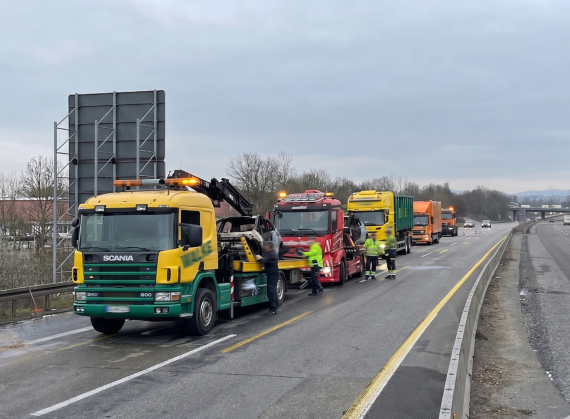 Truck Breakdown and Heavy Recovery in Germany: How Fleet Managers Can Control Towing, Recovery and Costs
 A truck breakdown in Germany is rarely just a technical problem. For fleet managers and dispatchers, it immediately creates a…
Read more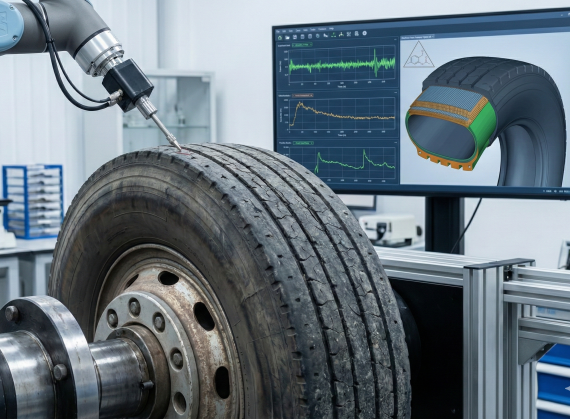 Thermodynamics and tribology of tyre aging: mechanisms of heat generation and structural degradation
 1. Introduction: the tyre as a thermodynamic systemA pneumatic tyre is a sophisticated composite structure designed to operate under extreme…
Read more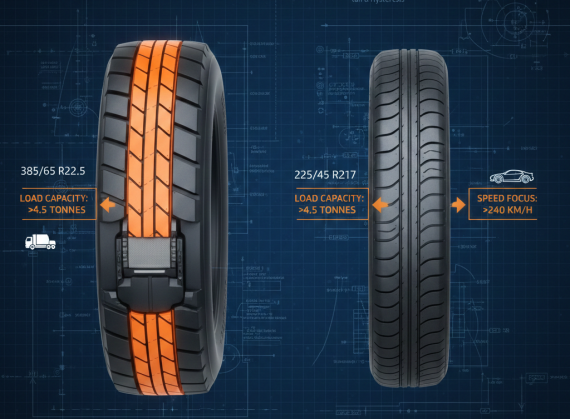 Truck vs Passenger Tyres: Structural Differences, Production Logic, and Regulatory Framework
 Physico-Chemical Foundation: the process mechanismthe operation of any pneumatic tyre is based on the phenomenon of hysteresis, which is a…
Read more