

How will European freight tariffs for road transportation change in 2024?





The road freight transport market in Europe is experiencing significant transformations due to a range of economic, political, legal, and technological factors. In the upcoming year of 2024, several European nations are planning to hike road tolls, leading to alterations in toll systems, particularly the introduction of advanced electronic toll systems in countries like France and Croatia. These novel systems will allow users to make electronic payments, potentially impacting the truck freight rates per kilometer for international transportation within Europe.
How will truck freight rates change?
Projections for the pricing trends in European road transportation indicate a notable impact on Central and Southern Europe. Key industry entities such as IRU, Transport Intelligence and Upply have published a benchmark index of truck freight rates in Europe by the conclusion of 2023. Experts anticipate a sluggish market for tariffs and expect prices to stabilize in 2024 as demand rises in Europe, coupled with the incorporation of a CO2 factor in transportation costs, thereby escalating expenses, what will overlap with the existing need for monthly truck maintenance at a truck service.
The rising costs in Central and Southern Europe are poised to result in increased trucking freight costs in the first quarter of 2024, followed by a rebound in demand in the latter half of the year.
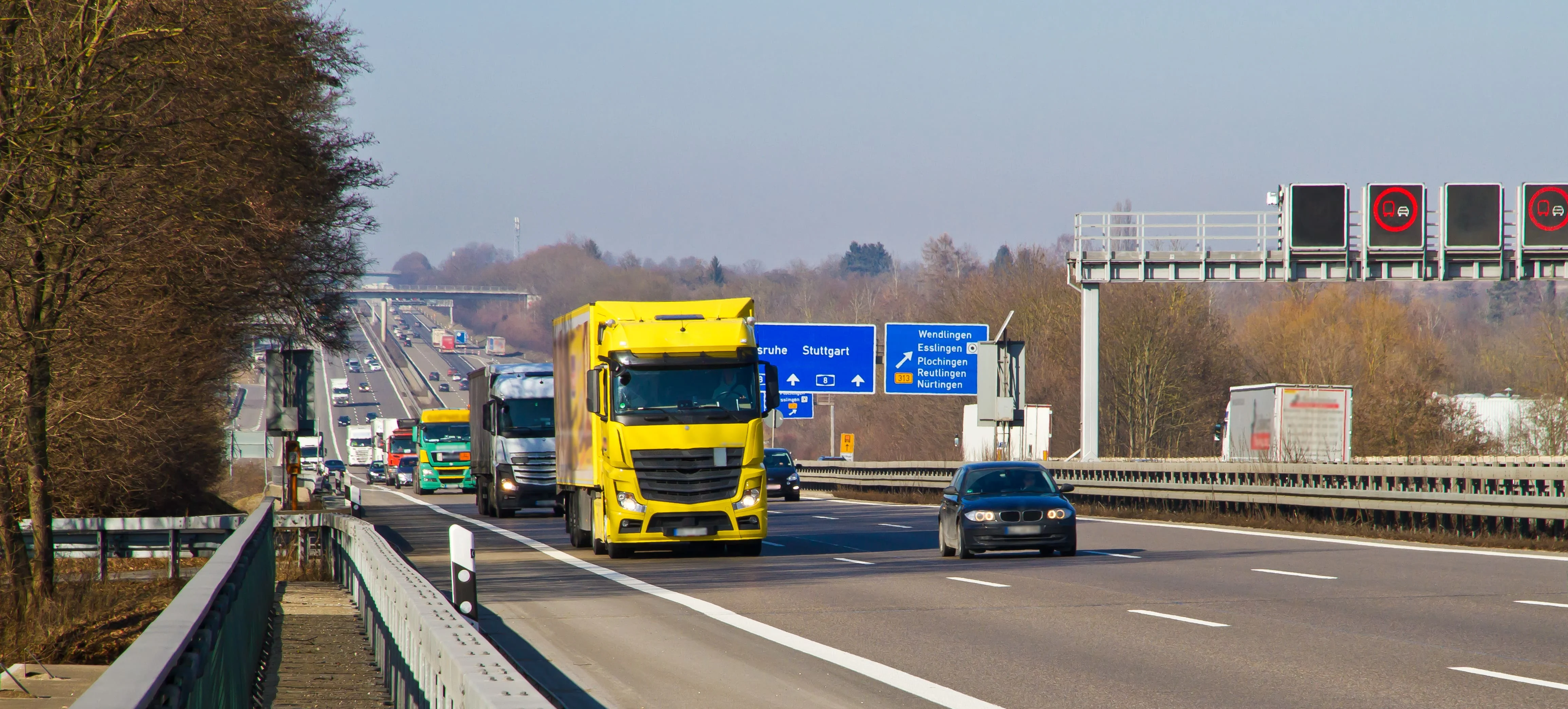
What will be the full truckload freight rates in Europe per km in 2024: Central and Southern Europe?
The cost of delivery fluctuates based on several factors, including the nature of the goods, distance covered, and the mode of transportation employed.
Pricing Dynamics:
- Longer routes generally entail a lower cost per kilometer.
- The choice of vehicle significantly influences the expenses; larger trucks typically incur higher costs compared to smaller vehicles like Sprinters or Caddies.
Trucking Freight Costs Overview:
Truck transportation expenses typically range between €0.50 and €2.00 per kilometer. Besides, the hourly rates of transport companies can vary between €40 and €100 per hour.
Additionally, the nature of goods being transported can significantly impact expenses, especially for delicate items requiring specialized handling and storage conditions in on-road transport and logistics.
Important Things to consider while transporting goods:
Size and weight of goods are determining factors; larger and heavier shipments usually come with higher price tags.
The mode of transportation chosen, such as ships or airplanes for international shipments, impacts overall costs.
Some companies levy separate charges for arrival and departure, and additional fees may apply during loading and unloading.
Optimizing Road Freight Expenses: To identify the most economical choice, it's recommended to compare prices from various local transport companies. This comparison helps in selecting the optimal and cost-efficient option for delivery.
Which countries are most frequently involved in road freight transport in Europe?
In 2022, Poland emerged as the top player in road freight transport within the European Union (EU). The country's overall transport volume amounted to 385.1 billion tonne-kilometres, surpassing Germany, the second-ranking nation, by 81.2 billion tonne-kilometres.
Poland commands a 20% share in the European truck freight traffic, underscoring its pivotal role in the transportation sector. Particularly noteworthy are Polish transport companies operating along critical routes connecting Poland and Germany, ranking second in significance only to the routes between Germany and the Netherlands.
Besides these primary routes, Poland serves as a crucial node in international road transport, facilitating connections like Czech Republic-Poland, Italy-Poland, and Poland-Slovakia. The involvement of Polish hauliers is robust, with their transportation accounting for 92-98% of the freight along these routes.
Poland's influence is pronounced on multiple strategic road freight routes in the EU. Polish companies not only engage in loading and unloading activities but also wield substantial influence on routes linking Germany and the Netherlands, Belgium and France, Belgium and the Netherlands, as well as Germany-France and Germany-Belgium in the context of big road freight and onroad transport and logistics in Europe. And since Germany has become the center of the intersection of trade and road routes, 24 hour roadside assistance for trucks and trailers is actively developing on its territory.
Main trends in trucking freight rates 2024 in Germany
Recently, digital transport intermediary Sennder published an analysis report examining the factors driving current shifts in the transport industry. As per the company's data, the overall expense of European road freight transportation has surged by 13%. Nevertheless, these figures exhibit substantial discrepancies across different nations.
For instance, as indicated by the freight forwarder, truck freight rates on international road freight routes from Poland to Germany experienced a steep 24% increase in 2022. Simultaneously, costs for domestic German road freight transport, typically characterized by high demand for transportation services, rose by 18%.
However, the most recent data for 2023 depicts an opposing trajectory. According to the intermediary, during January and February 2023, road freight transport costs saw a 4 percents decline in comparison to the corresponding period last year. The company attributes this reduction to the alleviation of the seasonal economic downturn.
How can an increase in CO2 tax transform European road freight?
An additional CO2 surcharge on truck tolls is slated for 2024, potentially resulting in substantial hikes in logistics costs. Projections from the German Retail Association (HDE) suggest that trucking freight costs could potentially double due to these impending adjustments.
Toll rates from 01.01.2023 in cents/km in Germany
| TOTAL WEIGHT | 7,5 – 11,99 t | 12 – 18 t | > 18 t | > 18 t |
| NUMBER OF AXLES | all | all | up to 3 | up to 4 |
| Euro 6 | 9,8 | 14,0 | 18,1 | 19,0 |
| EEV/Euro 5 | 12,6 | 17,7 | 22,1 | 22,9 |
| Euro 4 | 14,2 | 18,8 | 23,9 | 25,4 |
| Euro 3 | 17,1 | 22,6 | 29,3 | 31,6 |
| Euro 2 | 19,6 | 24,6 | 32,3 | 34,9 |
| Euro 0/1 | 19,7 | 24,8 | 32,8 | 35,4 |
Road freight within Europe might encounter escalating rates, compelling companies to transfer these added financial burdens to their clientele. Consequently, a discernible uptick in prices for international road transportation could be observed.
Nevertheless, the ramifications for the transportation sector might vary. The drive to curtail CO2 emissions is expected to prompt increased investment in eco-friendly transportation modes. Companies investing in cleaner technologies could potentially gain from tax incentives or governmental support programs aimed at curbing CO2 emissions in on-road transport and logistics within Europe.

Useful info updates via Telegram Subscribe to the Telegram Bot and get:
- Current news about the traffic situation in Germany
- Emergency help for your truck - just send HELP to the bot
 Truck Breakdown and Heavy Recovery in Germany: How Fleet Managers Can Control Towing, Recovery and Costs
 A truck breakdown in Germany is rarely just a technical problem. For fleet managers and dispatchers, it immediately creates a…
Read more Thermodynamics and tribology of tyre aging: mechanisms of heat generation and structural degradation
 1. Introduction: the tyre as a thermodynamic systemA pneumatic tyre is a sophisticated composite structure designed to operate under extreme…
Read more Truck vs Passenger Tyres: Structural Differences, Production Logic, and Regulatory Framework
 Physico-Chemical Foundation: the process mechanismthe operation of any pneumatic tyre is based on the phenomenon of hysteresis, which is a…
Read more