

Truck spare wheel requirements in Europe: how essential is it for long-haul drivers in Germany?





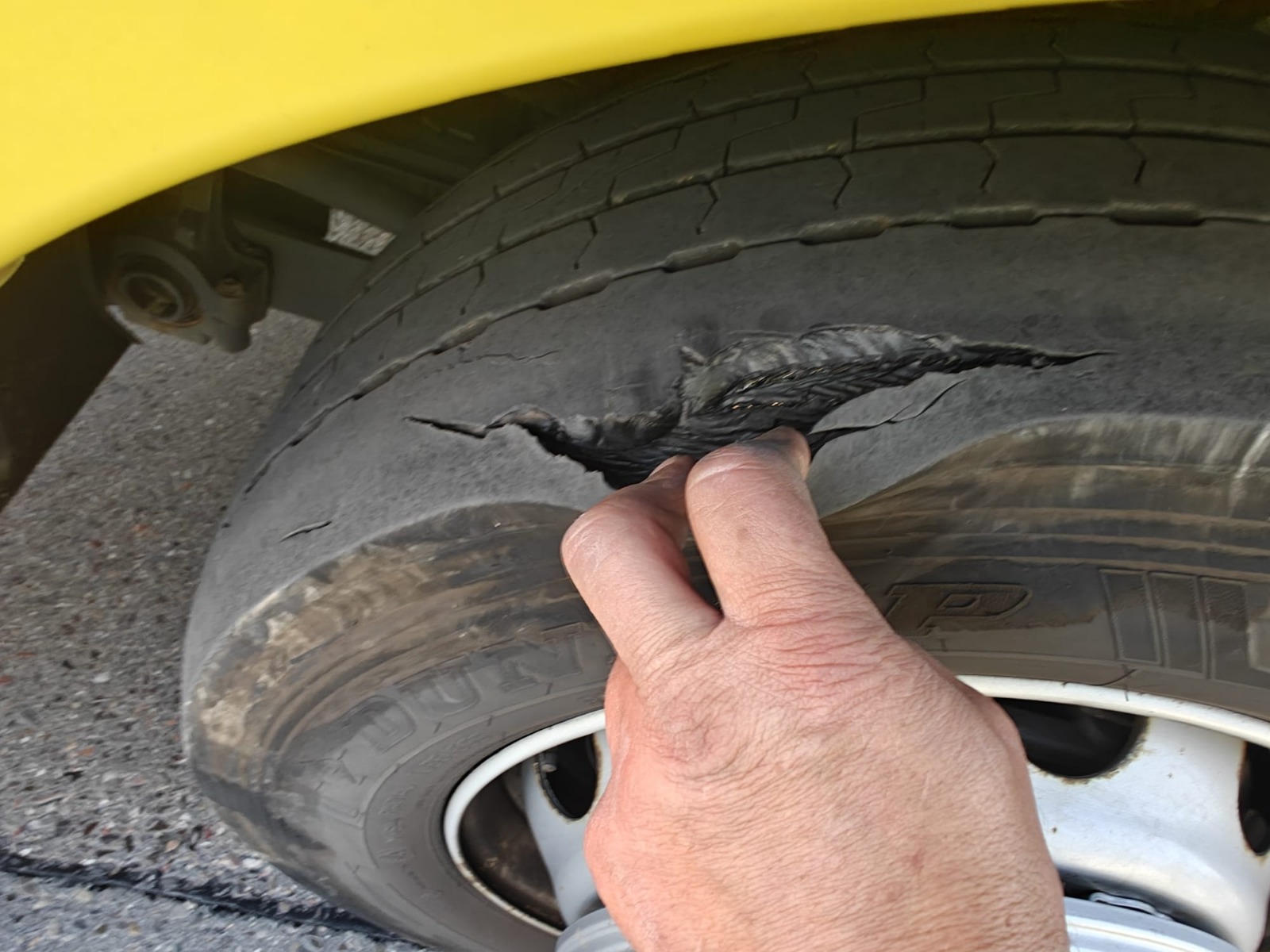
There is no direct legal requirement in Germany mandating a spare tire for truck or a tire repair kit. However, this does not protect drivers from the risks of tire damage. Due to heavy loads, even a minor puncture can quickly lead to a tire blowout on the highway, often causing long delays, delivery disruptions, and additional costs for a mobile tire service.
In practice, for heavy trucks and long-haul vehicles, Run-Flat technology has proven ineffective due to high vehicle weight. That’s why international hauliers need to understand the pros and cons of various options — from equipping the truck with a full-size spare or a repair kit to signing contracts with companies that offer mobile tire services. In this article, we look at the details of alternative solutions, including technical specifications, self-replacement options, and country-specific regulations to help you choose the safest and most efficient option.
Would it be possible to change a spare tire truck independently while on the road?
In Germany, replacing a damaged truck tire on your own is not always possible and depends heavily on the circumstances. Unlike in Eastern Europe, where drivers often handle repair work themselves, Germany has strict road safety regulations — especially on highways. That’s why relying solely on your tools and skills isn’t always the best idea.
Here’s what you need to consider depending on the road type:
- Autobahn (e.g. A3, A7, A61) — stopping to perform any kind of repair, including spare tire on truck, is prohibited on these roads. If a puncture occurs, you must call a mobile tire service or a tow truck.
- Bundesstraße — a national highway (e.g. B9, B27, B304) — a tire replacement is allowed only if there’s a wide and safe shoulder and if a warning triangle is placed at least 150 meters behind the parked truck.
- Landstraße — a local road (e.g. L303, L105, L516) — self-replacement is allowed, but only if all safety conditions are met and you have the necessary equipment.
In German logistics, there are various types of commercial trucks, and vehicles designed for specific purposes often have unique structural features. As a result, the process of removing a spare wheel from its storage location may also differ significantly — which can pose a serious challenge for someone without professional training.
The differences typically relate to frame height, mounting platforms, and access to the spare wheel. For example, in a standard semi-truck with a high frame, installing the spare may require a subframe mount and proper tools, whereas in a refrigerated truck or car transporter, the spare wheel may be mounted in an integrated tray, which requires to be specialized rotating mechanisms or lifting rails.
In the case of car carriers and container trucks, spare wheel access is often complicated by the specific placement of the body or the presence of communication or refrigeration lines.
To replace a spare truck wheel on the spot, the driver must have:
- an industrial-grade truck jack rated for the appropriate axle load (e.g., up to 11 tons);
- tools for removing the wheel, including extended impact wrenches with high torque;
- access to a truck spare tire mount on a rim, guaranteed to be in good condition and properly inflated, matching the required size and specifications.
In practice, however, many companies in Germany discourage drivers from changing tires on their own. The reasons are clear:
- First, not all road segments allow this physically.
- Second, failure to follow regulations when acting independently may result in fines from the police or BAG (Federal Office for Goods Transport).
- Third, incorrect mounting, especially when dealing with dual wheels, can cause accidents or damage the hub.
Additionally, modern cargo, trailer, and truck insurance systems are typically based on the condition that only professional repair assistance is used. This is especially relevant when operating vehicles such as MAN TGX, Mercedes-Benz Actros, DAF XF, and others, where the process of accessing and replacing the spare wheel can be complex and limited by design constraints.
Truck spare wheel or a repair kit: legal and logistical aspects within the EU
Whether a spare truck wheel or repair kit is mandatory for international trucking is regulated at the national level, as there are no unified requirements across the European Union. Although Germany does not explicitly require drivers to carry a spare wheel, cross-border transport must account for the laws and logistics of other countries.
That’s the key distinction between a formal absence of legal obligation in one country and the practical responsibility of the carrier to resolve breakdowns under EU-wide logistics norms.
Neighboring countries of Germany
In some countries, a truck bed spare tire is not listed among the mandatory equipment. However, the carrier is still responsible for maintaining the vehicle’s roadworthiness throughout the entire route:
- Austria — According to the Kraftfahrgesetz, using a tire repair kit instead of a spare wheel is allowed, but only if the vehicle is equipped with a factory-installed compressor and sealant. During roadside checks, inspectors may request to see the kit. This is especially relevant when driving on routes such as B179, A12, or S36. In many trailer and refrigerated unit rental contracts, the presence of a spare wheel or a mobile tire service agreement is often a contractual requirement.
- Poland — National regulations require that trucks carry equipment for addressing tire damage, though using a repair kit is permitted. A mobile tire service agreement is also considered a valid solution in the case of tire damage. During inspections by the ITD (Road Transport Inspection), the driver must be able to prove that the issue can be resolved within a reasonable timeframe.
- Czech Republic — Alternative solutions are allowed, but only if the vehicle is equipped with the necessary tools for inflating and sealing the tire.
Southern and Western routes
When transporting goods to Southern and Western European countries, additional risks and climate conditions must be considered. While there is no strict EU-wide requirement for a mandatory spare tire in truck bed, many logistics companies enforce it as part of their internal standards:
- France — Repair kits are allowed, but if a truck is stranded on a motorway and the issue cannot be resolved on the spot, the company may be fined for obstructing traffic (according to Code de la route, Article R412-10). A spare wheel or repair kit is considered an acceptable solution, but drivers are often prohibited from working on the vehicle themselves on motorways (e.g., A1, A10, A35). This means that a mobile service may still be required, even with a repair kit.
- Italy — Under the Codice della Strada, there is no strict legal requirement to carry a spare wheel in a truck, but the carrier is obliged to quickly resolve any breakdown by any means available, especially in areas with limited access to services, such as the A19 (Sicily), A24 (Apennines), or A22 (Dolomites). In some regions (including the Alpine zone), compliance with seasonal tire requirements and the presence of a winter spare tire under truck bed is also checked during the winter months.
- United Kingdom — Despite leaving the EU, carriers must still comply with VOSA Roadworthiness Guidelines. A spare wheel and proper equipment for tire replacement — including a repair kit, a heavy-duty jack, and signaling devices — must be provided. For international routes from Europe to the UK, it is recommended to carry a full-size spare.
Full-size truck spare wheel or a space-saver tire: last resort or real alternative?
In German logistics, a full-size spare tire in bed of truck remains the priority. Since it's used in emergency replacement, it must be suitable for any axle, meet standard size requirements, and match the correct load index and radius. Many companies opt for a full-size spare when operating on routes with limited access to tire service stations, such as A71, B191, or L132.
Using a space-saver tire (temporary spare) for a truck is only acceptable in exceptional cases — for internal movements within a company’s premises or as a temporary measure for reaching the nearest safe parking area.
In practice, compact spares may be used:
- only on trailer axles with minimal load;
- on trailers or light commercial vehicles (up to 3.5 tons total weight);
- as a temporary solution if a service station is available within a 30 km radius.
For trucks like the MAN TGX, Volvo FH, or Iveco S-Way with a total weight of 18 to 40 tons, a space-saver spare is not safe due to:
- differences in tread depth;
- reduced stability during emergency braking;
- inability to evenly distribute pressure in dual-wheel setups.
A tire repair kit with sealant and compressor may be suitable for repairing sidewall punctures — but only if the tire is tubeless. In any other case, professional replacement will be required.
Requirements for selecting a truck spare wheel by axle type
Different requirements apply to drive, steering, and trailer axles — including tread pattern and depth, load index, seasonality, stability, and resistance to deformation. For example, steering axles require precise balance, minimal runout, and a directional tread pattern. Drive axles, on the other hand, must be designed for traction and reinforced for higher grip. Trailer axles are usually equipped with tires featuring reinforced sidewalls and enhanced resistance to side load wear.
In practice, carriers cannot realistically transport three separate spares for each axle type. That’s why a universal spare is often chosen, one that allows for temporary installation on any axle until reaching the nearest service point.
Requirements for a universal truck spare wheel:
- must match the tire size specified in the vehicle’s registration documents;
- must be rated for the maximum axle load as part of the total vehicle weight (including full load);
- must have a suitable profile and symmetric tread pattern that fits all axle types;
- tread depth must not be lower than the legal minimum for steering axles (1.6 mm in Germany, with 3 mm recommended);
- the tire must be tubeless (if allowed by local vehicle regulations), marked with a universal M+S or 3PMSF label.
Such full-size spare wheels may be used permanently in the following cases:
- trailer axles with a load of up to 8 tons;
- auxiliary axles (e.g., on car transporters, buses, third axles on MAN TGX 6x2, etc.);
- internal transfers within private logistics terminals.
Temporarily (until reaching a service station), a spare may also be installed on:
- the steering axle of any truck unit;
- the drive axle under partial load;
- dual-wheel setups, if one of the paired wheels has uneven wear or mileage, or shows different inflation values — this can cause tire overheating, uneven pressure distribution, and balance issues, especially on steering axles or during emergency braking and sharp turns.
Seasonal requirements for a truck spare wheel
In Germany, the use of seasonal tires for trucks is strictly regulated. According to §2 of the StVO and technical requirements for winter equipment, from November 1 to April 15, steering and drive axles of truck units, vans, and refrigerated trucks must be fitted with winter tires marked 3PMSF (Three Peak Mountain Snowflake symbol).
Since 2024, M+S tires are no longer considered sufficient, unless accompanied by a production certificate dated before 2017.
As a result, the spare wheel for winter use must also carry the same 3PMSF marking — otherwise, installing it may be considered a regulatory violation. These rules are especially enforced on roads with constant winter checks, such as:
- A8 (Stuttgart – Salzburg);
- B500 (Schwarzwaldhochstraße);
- A93 (Bavaria – Austria).
All-season tires are only permitted in winter if they are certified with the 3PMSF symbol. However, in practice, their grip and braking performance in cold temperatures often fall short compared to full winter tires. That’s why major carriers operating fleets such as Renault T High, Iveco X-Way, or Ford F-MAX usually follow a strict seasonal spare tire replacement policy.
A separate spare tire for summer and winter use is required when:
- operating regularly in regions with significant temperature fluctuations;
- driving through Alpine routes or mountainous passes;
- using specialized low rolling-resistance summer tires not designed for cold weather.
Recommendations for placement and mounting of a truck’s spare wheel
There are no universal regulations defining the “correct” location for a truck’s spare wheel. However, it is essential that the driver know exactly where the spare is stored and has quick access to it in an emergency. If a tire is damaged on the motorway and the spare are mounted on the left side, the driver is not allowed to cross into the left lane or work on the roadside without proper protective measures. In such cases, the police or road service must be called to ensure safety and temporarily close the affected lane — otherwise, fines and administrative penalties may apply under §15 of the StVO. We cover this issue in more detail in this article.
Acceptable mounting locations:
- Under truck spare tire mount — the most common solution for truck units and car transporters (e.g., Renault T High, Volvo FH16), especially in 4x2 or 6x2 configurations. The truck spare wheel is placed in a tray beneath the rear section of the frame and secured with a lock or integrated clamp. Suitable for vehicles with high frames and enough clearance.
- Vertical spare tire mount for truck bed — mounted vertically with a swing-arm locking system. Ideal for truck units with a short wheelbase or limited space underneath. Often used in northern regions, where quick access is critical in bad weather.
- On the trailer chassis — common for refrigerated trailers, container chassis, or spare tire mount for flatbed truck. The spare wheel for the trailer is mounted on the front beam or in a special cassette on the side of the trailer. This is useful when the truck is always paired with the same trailer.
- Integrated in the frame structure — frequently seen in container chassis and car transporters, where the spare is mounted inside the frame. This setup protects the wheel from dirt, but may limit accessibility.
BAG inspections and the role of a truck unit spare wheel during technical checks
Although a spare wheel is not part of the mandatory equipment for trucks in Germany, its technical condition may still be reviewed during BAG inspections (Bundesamt für Güterverkehr) and the HU inspection (Hauptuntersuchung — mandatory technical check regulated by §29 StVZO).
If a spare wheel is installed on the vehicle — even temporarily — it is automatically considered an active component of the running gear. This means that the inspector is entitled to assess it based on the same criteria as any other tire: tread depth, wear, sidewall damage, compatibility with the required size, load index, and seasonal marking.
If the spare tire rack for truck fails to meet the requirements, the following consequences may apply:
- during a routine roadside or terminal check — a verbal warning and a requirement to replace it before the next trip;
- during the HU inspection — a written note in the report, which must be addressed before the vehicle can pass;
- if a defective spare is installed on an axle — an immediate driving ban and a mandatory call for a mobile tire service, at the carrier’s expense.
To summarize: even a rarely used trailer spare wheel must be kept in good condition and meet all the same standards as the main tires. This is especially important for companies operating on high-inspection routes such as A4, A61, and B255.
Germany may not legally require a spare wheel, but the requirements for spare tire condition are strict. Every driver should be fully prepared with the tools and knowledge to quickly restore vehicle operability — to minimize traffic risks and avoid creating hazardous situations on the road.

Useful info updates via Telegram Subscribe to the Telegram Bot and get:
- Current news about the traffic situation in Germany
- Emergency help for your truck - just send HELP to the bot
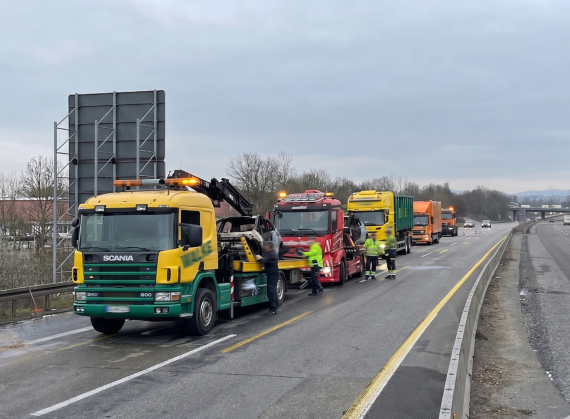 Truck Breakdown and Heavy Recovery in Germany: How Fleet Managers Can Control Towing, Recovery and Costs
 A truck breakdown in Germany is rarely just a technical problem. For fleet managers and dispatchers, it immediately creates a…
Read more Thermodynamics and tribology of tyre aging: mechanisms of heat generation and structural degradation
 1. Introduction: the tyre as a thermodynamic systemA pneumatic tyre is a sophisticated composite structure designed to operate under extreme…
Read more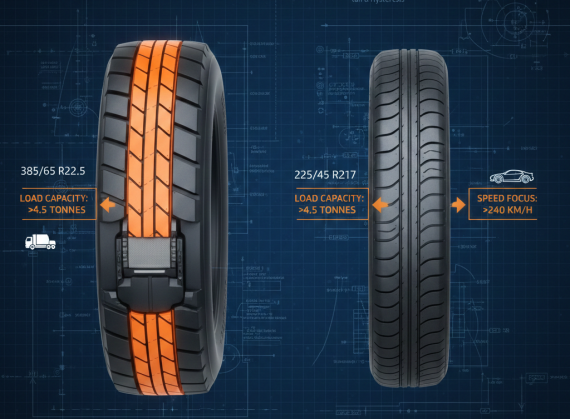 Truck vs Passenger Tyres: Structural Differences, Production Logic, and Regulatory Framework
 Physico-Chemical Foundation: the process mechanismthe operation of any pneumatic tyre is based on the phenomenon of hysteresis, which is a…
Read more