

Transporting dangerous goods in Germany





What are dangerous goods?
Due to their properties, dangerous cargoes pose a threat to the life and health of people, the environment, buildings, structures, machinery and other objects.
In order to prevent possible damage, these materials are divided into several dangerous goods classes to indicate their nature and the corresponding precautions to be taken during transportation. Strict regulations exist for transportation, which require compliance with all necessary measures and conditions.
In this article, based on the experience of MT Onroad experts, we tell you what ADR is in cargo transportation, and other nuances that are important to know about the implementation of road transport of products with special transportation requirements in Germany.
What do orange warning plates on a vehicle mean?
Orange warning signs on a vehicle indicate that it is carrying dangerous or potentially dangerous materials. They warn drivers and pedestrians in the surrounding area to exercise caution. These signs are required by international standards for transporting hazardous goods.
Having determined the class of the cargo, it needs to be assigned a UN number consisting of 4 digits. The next step is proper packaging with ADR labelling. Based on the class of danger, the following types of packaging with unsafe cargoes signs are distinguished:
Very dangerous.
Environmentally dangerous.
Low-dangerous.
To determine which type of packaging to use, it is necessary to refer to the official list of dangerous goods that are allowed to be transported by road. All packages must be marked with different sizes and colors. The markings should be placed in the most visible place. A specific class has its own label.
Using these warning signs is crucial, as they rapidly and evidently indicate to other drivers and emergency services that the vehicle presents specific potential hazards. This enables individuals nearby to take suitable measures and respond accordingly during an accident or dangerous event.
Which dangerous goods classes exist?
ADR classes are groups into which all types of dangerous goods are categorized. There are a total of nine ADR classes, each of which has several subclasses.
We have done a little research into what dangerous cargoes and their classes are.
Nine ADR Classes:
Explosive/Pyrotechnic substances/items, can explode on heat/impact. Six subclasses in total.
Gases and mixtures containing gases. Substances with high toxicity, easily ignited and oxidised. 7 subclasses in total.
Flammable mixtures with a flash point not exceeding +60 degrees Celsius. Have the ability to form flammable vapours. There are three subclasses in this class.
Flammable substances/materials. Can be ignited by factors such as: heat, friction, moisture absorption. There are a total of 3 subclasses in Class 4.
Organic peroxides and oxidising substances. Capable of releasing oxygen and supporting combustion. There are two subclasses in this group.
Infectious/poisonous substances, can provoke poisoning and even death. There are two subclasses here - poisonous substances, most of which are flammable, and infectious substances with pathogens.
Radioactive substances. Can provoke radioactive exposure, explosion.
Corrosive/corrosive substances. May cause damage to skin, respiratory tract, mucous membranes. In some cases, substances in this category may provoke fire. There are three subclasses.
Dangerous substances and objects not included in the previous 8 classes. There are two subclasses.
This overview of dangerous goods classes aids in identifying hazards and establishing appropriate safety measures for the transportation and handling of dangerous goods.
What are the penalties for non-compliance with dangerous goods regulations in Germany?
The fines for violations of hazardous goods transportation regulations in Germany can vary depending on the type of none-compliance, the hazardous goods class, and the severity of the offense. Here are some examples and their corresponding potential fines:
Missing or inadequate labeling: If a vehicle transporting hazardous goods is not properly labeled or if the labeling does not meet legal requirements, it can result in a fine of up to 300 euros.
Non-compliance with transportation regulations: Violations of specific regulations for hazardous goods transportation can incur fines ranging from 150 to 400 euros.
Speeding: Fines for speeding violations during hazardous goods transportation are higher compared to similar offenses without dangerous goods and can range from several hundred to several thousand euros.
Driving without required permits or training: Absence of necessary permits for hazardous goods transportation or driving without the required training and qualification can lead to fines ranging from 150 to 500 euros.
The exact fines for hazardous goods transportation violations can vary significantly in Germany and range from several hundred euros to several thousand euros.

Useful info updates via Telegram Subscribe to the Telegram Bot and get:
- Current news about the traffic situation in Germany
- Emergency help for your truck - just send HELP to the bot
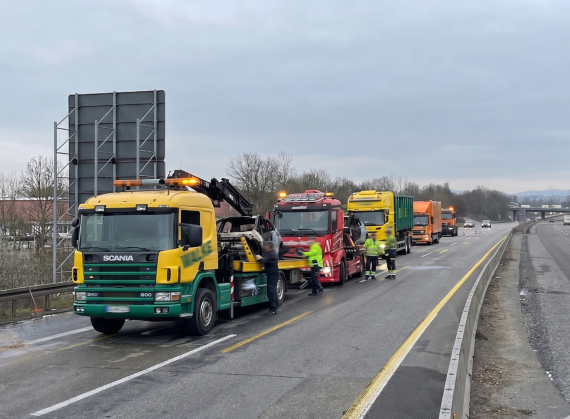 Truck Breakdown and Heavy Recovery in Germany: How Fleet Managers Can Control Towing, Recovery and Costs
 A truck breakdown in Germany is rarely just a technical problem. For fleet managers and dispatchers, it immediately creates a…
Read more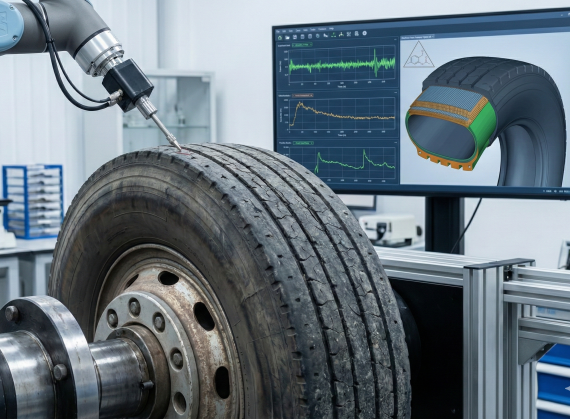 Thermodynamics and tribology of tyre aging: mechanisms of heat generation and structural degradation
 1. Introduction: the tyre as a thermodynamic systemA pneumatic tyre is a sophisticated composite structure designed to operate under extreme…
Read more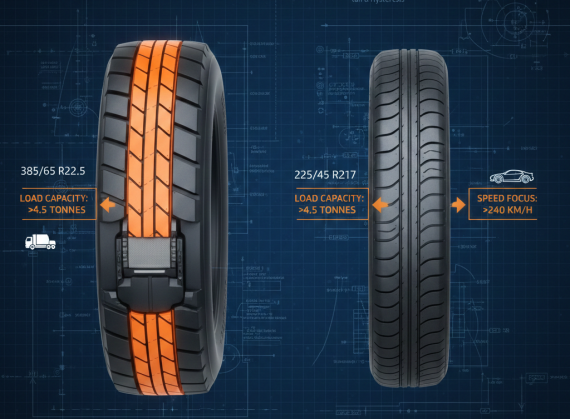 Truck vs Passenger Tyres: Structural Differences, Production Logic, and Regulatory Framework
 Physico-Chemical Foundation: the process mechanismthe operation of any pneumatic tyre is based on the phenomenon of hysteresis, which is a…
Read more