

Electric truck: myths, misconceptions and legal incentives in Germany





In the world of electric vehicles, electric trucks are discussed just as much as electric cars. Electric truck manufacturers play a crucial role in the transportation industry's transition to sustainability. MTonroad experts compiled detailed information about the tests carried out, which shed light on the operation, maintenance, and practical application of electric trucks.
Myth 1: e-lkw consume less energy per 100 km
This myth suggests that electric trucks consume more energy per 100 km than conventional combustion engine trucks. At first glance, this may seem logical, since their engines are electric. However, energy efficiency and range are not the same thing. Written calculations show that e trucks are more energy-efficient per 100 km. But this does not consider how far they can travel on one charge. Therefore, to evaluate the efficiency of battery electric trucks, it is necessary to consider not only energy efficiency over short distances but also the potential for long-term use over longer distances.
Myth 2: lkw elektro use cheap resources
Electric truck manufacturers are often thought to use cheaper resources to operate, but upon closer inspection, they are not necessarily more fuel efficient. This is because their operation is based on the cost per unit of electricity, which is usually cheaper than traditional fuel. Additionally, ev trucks emit no harmful emissions, reducing their environmental impact. However, the use of electric trucks requires an electric truck charging infrastructure that can provide enough electricity to charge a large number of vehicles. Constructing and maintaining such stations requires significant investment and can be challenging, especially in regions with limited resources. In addition, electricity generation can cause environmental problems due to heat emissions and other factors. One example of environmental problems associated with electricity generation is thermal power plants, which are often used to generate electricity. They produce greenhouse gas emissions that have a negative impact on the environment. So, despite some advantages, the use of electric trucks also comes with certain challenges and environmental issues that need to be taken into account when deciding to choose this mode of transport.Myth 3: e-lkw have the same payload capacity as diesel trucks
Electric trucks are said to have impressive towing power, making them suitable for a variety of commercial applications. However, it should be noted that the batteries used in electric heavy duty trucks can be quite heavy, which affects the overall load capacity of the vehicle. Therefore, when planning routes and electric truck charging, it is necessary to take into account the weight of batteries and evaluate their impact on load capacity to avoid overcharging and ensure safe operation of electric trucks.
What issues with the operation of elektrischer LKW remain unresolved?
One of the significant challenges with electric trucks is their limited range due to a shortage of batteries, which currently falls short of traditional fuel sources. Therefore, ram electric trucks are mainly suitable for short- and medium-distance transport rather than long-distance ones. Another obstacle relates to electric truck charging infrastructure. Although the charging network is growing, it still lags behind the availability and convenience of gas stations for regular cars. This discrepancy can cause inconvenience and delays for freightliner electric truck drivers, especially in remote or underserved areas. And if you encounter a problem and did not have time to put the truck on charge in time, you can solve the situation by calling a towing service to transport the car to a charging station.E truck: what is the German government's strategy to promote the emerging logistics sector?
The German government is investing heavily in the development of electromobility in the country. By 2030, there will be a million charging stations installed at gas stations across the country. In addition, the government is helping companies transition to electric vehicles by subsidizing 80% of the additional costs associated with vehicles and truck charging infrastructure. This makes the transition to electric trucks especially attractive for companies. The government has allocated 1.85 billion euros to expand electric truck charging infrastructure to enable more environmentally friendly vehicles. The government is investing in developing a network of charging stations for e-trucks. This investment is aimed at developing the charging network, with new stations installed on major highways and in industrial areas, as well as upgrading existing infrastructure to ensure fast and efficient electric truck charging. Thus, electric trucks become an integral part of our transport future, illuminating new horizons for sustainable logistics. As we continue to explore and develop this technology, the role of electric truck manufacturers and legislative support are key to helping drive the transition to a greener and more efficient transport sector.
Useful info updates via Telegram Subscribe to the Telegram Bot and get:
- Current news about the traffic situation in Germany
- Emergency help for your truck - just send HELP to the bot
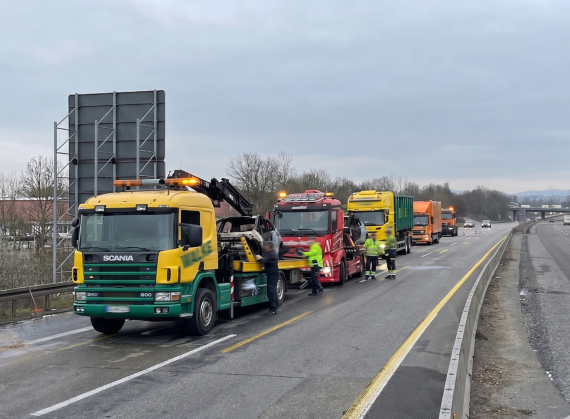 Truck Breakdown and Heavy Recovery in Germany: How Fleet Managers Can Control Towing, Recovery and Costs
 A truck breakdown in Germany is rarely just a technical problem. For fleet managers and dispatchers, it immediately creates a…
Read more Thermodynamics and tribology of tyre aging: mechanisms of heat generation and structural degradation
 1. Introduction: the tyre as a thermodynamic systemA pneumatic tyre is a sophisticated composite structure designed to operate under extreme…
Read more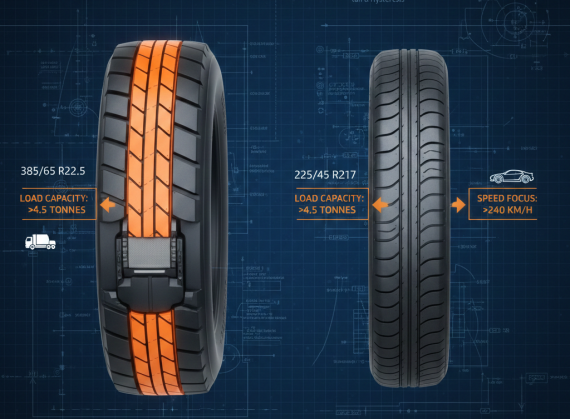 Truck vs Passenger Tyres: Structural Differences, Production Logic, and Regulatory Framework
 Physico-Chemical Foundation: the process mechanismthe operation of any pneumatic tyre is based on the phenomenon of hysteresis, which is a…
Read more