

Safe distance and penalties: what distance should be maintained between trucks on the highway?





Maintaining a safe distance between trucks on the highway is crucial for road safety. Failing to maintain the required distance can lead to dangerous situations and significantly increase the risk of accidents. Strict sanctions, such as a distance penalty, are imposed for such violations, including substantial fines, penalty points in the violation record system, and even the suspension of a driver's license. Therefore, it is essential to know the current rules and always adhere to them to ensure your safety and the safety of other road users.
Main fines for distance violations for trucks over 35 tons
| Violation | Fine (€) | Points | Driver's license suspension | ||||
| 160 € | 1 | No | ||||
| 240 € | 1 |
| ||||
| 320 € | 2 |
| ||||
| 320 € | 2 |
| ||||
| Distance violation in urban areas when exceeding speed | ab100€ | 1 | Depending on the severity of the violation | ||||
| Distance violation on the highway in poor weather conditions | ab 80€ | 1 | Depending on the severity of the violation |
If you receive a fine, you have the right to appeal it. In disputed situations related to measuring the distance between trucks, it is advisable to consult specialists who can help protect your rights and avoid unjustified penalties.
Why is it important to maintain a safe distance and know how It Is measured?
Maintaining a safe distance not only reduces the risk of accidents but also helps avoid hefty fines for violations. Many drivers underestimate the potential consequences and receive unnecessary fines simply because they do not know all the rules.
Trucks have a significantly longer braking distance than passenger cars due to their mass and weight. When a fully loaded truck brakes, considerable force is generated, making it difficult to stop quickly. The truck stopping distance is affected by various factors, including weight, load, road conditions, and speed. To avoid collisions, traffic regulations clearly define the minimum distances that vehicles must maintain, depending on their weight. These rules provide enough time to react in case of emergency braking. Adhering to these distances is especially important because a truck following too closely will not be able to stop in time in an emergency, preventing severe accidents and their consequences. Using a truck stopping distance calculator can help drivers estimate the required distance in different conditions.
What is the minimum distance trucks must maintain on the highway?
There are clear rules regarding the minimum truck distance between trucks on highways, developed considering critical situations such as sudden braking or emergency maneuvers. For trucks longer than 7 meters and weighing more than 35 tons, special requirements apply depending on speed:
- At speeds up to 60 km/h — the minimum distance is 50 meters.
- At speeds up to 80 km/h — the distance must be at least 75 meters.
- At speeds up to 100 km/h — the distance must be at least 100 meters.
The truck stopping distance at 55 mph can be significantly longer than expected, often requiring up to 300 feet or more to come to a complete stop, depending on road conditions and vehicle load.
Fines for violations
Failure to comply with these rules results in fines. The minimum amount is 160 euros; however, for serious violations, fines may be higher, and penalty points may also be added to the violation record. The large truck stopping distance compared to a car is considerably longer, often requiring two to three times more distance to stop safely due to the truck's greater weight and size.
Exceptions and special cases
These rules may not apply if:
- Traffic is congested or very slow, making it difficult to maintain the required distance.
- In challenging weather conditions where a flexible approach to maintaining distance may be needed for safety.
Frequently Asked Questions about distance compliance for trucks on highways
What is the minimum distance that should be maintained from the truck ahead?
According to the rules, the minimum distance between trucks on the highway should be at least half of the current speed of the vehicle in meters. This means that at a certain speed, the distance to the vehicle in front should be no less than half of the speedometer reading. This requirement ensures enough distance for safe braking in case of an emergency stop.
What distance should be maintained when trucks are moving at speeds over 50 km/h?
When moving at speeds over 50 km/h, trucks must maintain a distance of at least half of the speedometer reading. On highways, this means that the minimum distance to the vehicle in front should be no less than 50 meters. This provides the necessary time and space for adequate reaction and collision prevention at high speeds. For more specific calculations, you can use a stopping distance calculator for trucks or a semi-truck stopping distance calculator.
What sanctions are provided for violating distance rules?
Serious fines and other sanctions are provided for non-compliance with the established distance rules. The size of fines and other penalties can be significant. Detailed information on possible sanctions and fines can be found in the fines table.
Where can you find information about fines for distance violations for trucks?
Distance rules apply not only to heavy trucks, but also to lighter vehicles to ensure road safety. Detailed information on current rules and fines can be found on specialized information resources or in official documents.
What factors affect the braking distance of trucks when distance is violated?
The braking distance of a truck depends on several factors:
- Weight and load: Heavier and loaded trucks require a longer braking distance due to increased weight and load on the brakes.
- Road and weather conditions: On wet or slippery roads, as well as in poor visibility, the braking distance increases.
- Speed: The higher the speed, the longer the braking distance.
- Efficiency of the braking system: The condition and regular maintenance of the brakes are crucial for safety.
These factors highlight the importance of maintaining distance to minimize the risk of accidents.
When is it especially important for trucks to maintain a safe distance on the highway?
Maintaining a safe distance for trucks on the highway is crucial in critical situations. This is especially important in the following cases:
- At high speeds. Trucks require more distance for safe stopping in an emergency. If the distance is too small, it can lead to severe accidents.
- In poor weather conditions. Rain, snow, or fog significantly increase the braking distance. Truck drivers should increase the distance to adapt to higher safety requirements.
- When sudden obstacles appear. If a truck must brake sharply, sufficient distance helps avoid collisions, considering the necessary time for reaction and braking.
- During overtaking: It is also important to maintain stopping distance for a semi truck during overtaking to ensure safe movement and minimize risks.
Adhering to these distance rules on highways helps maintain road safety and avoid potentially dangerous situations. To avoid fines and other unpleasant consequences, it is essential to know and comply with current rules. Ensure you are aware of the latest requirements by studying information on specialized resources or in official documents.

Useful info updates via Telegram Subscribe to the Telegram Bot and get:
- Current news about the traffic situation in Germany
- Emergency help for your truck - just send HELP to the bot
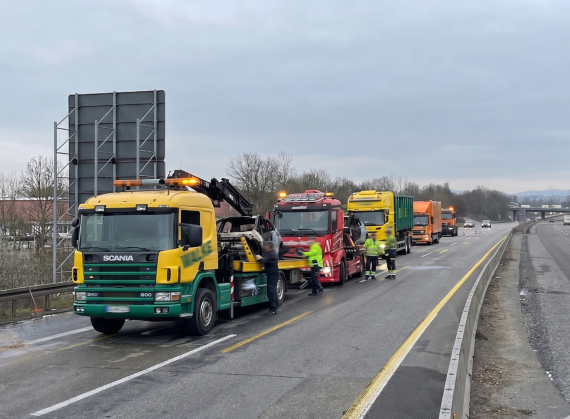 Truck Breakdown and Heavy Recovery in Germany: How Fleet Managers Can Control Towing, Recovery and Costs
 A truck breakdown in Germany is rarely just a technical problem. For fleet managers and dispatchers, it immediately creates a…
Read more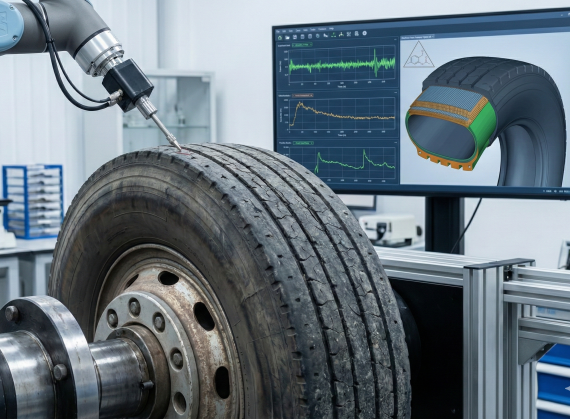 Thermodynamics and tribology of tyre aging: mechanisms of heat generation and structural degradation
 1. Introduction: the tyre as a thermodynamic systemA pneumatic tyre is a sophisticated composite structure designed to operate under extreme…
Read more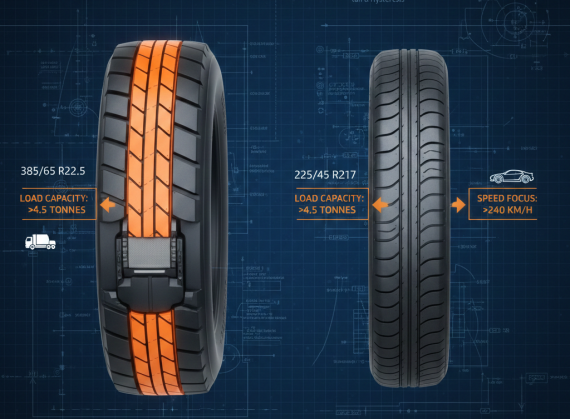 Truck vs Passenger Tyres: Structural Differences, Production Logic, and Regulatory Framework
 Physico-Chemical Foundation: the process mechanismthe operation of any pneumatic tyre is based on the phenomenon of hysteresis, which is a…
Read more