

Ensuring safety during breakdowns on highways: a guide for truck and bus drivers





Ensuring safety on federal highways (BAB) during breakdowns is crucial for preventing accidents and protecting road users. At the high speeds characteristic of highways, breakdowns of heavy vehicles or buses can pose a serious threat. Improperly marked breakdown sites can significantly slow down traffic and cause additional accidents.
This guide outlines essential safety measures and legal aspects for effectively protecting trucks and buses, and provides detailed recommendations for drivers and safety personnel when dealing with truck repair on the highway or bus repair on the highway.
When are repairs on the roadside permitted?
Truck repair on the side of the road is permitted only when it is necessary to fix critical malfunctions that require immediate intervention, such as tire changes or minor repairs to restore the vehicle's mobility. It is important to strictly respect all safety rules to minimize the risk of further accidents.
Key safety measures include:
- Activating hazard lights. This precautionary measure alerts other drivers to the breakdown site and encourages them to reduce speed.
- Setting up a warning triangle. The triangle should be placed at least 150 meters behind the vehicle to provide advance warning to approaching drivers.
- Using a warning light. A warning light should be placed near the vehicle to increase its visibility in low light conditions or at night.
What safety measures are required for repairs on the highway?
Strict safety rules apply on highways to ensure the safety of all road users:
- Immediately activate hazard lights. Avoid sudden braking in case of a malfunction, especially in the event of a tire puncture. Turn on the hazard lights while you continue to move by inertia.
- Safely park the vehicle. If possible, pull over to the roadside. If your vehicle can still move, head to the nearest rest area or highway exit with the hazard lights on.
- Mark the breakdown site. Ensure that the breakdown site is well-marked: turn on the hazard lights, set up a warning triangle, and place a warning light at a sufficient distance from the breakdown. The driver must wear reflective clothing to remain visible and reduce the risk of an accident.
- Notify the police. If the vehicle cannot be fully stopped on the roadside, or the breakdown occurs on the left side of the vehicle, the police must be called immediately at number 110. This is necessary to ensure the safety of the site and protect traffic. Never block traffic lanes yourself—this is the responsibility of the police.
When and how to report a breakdown?
If a hazardous situation arises that cannot be resolved independently, assistance must be requested from the police or roadside assistance service. Be prepared to provide the following information:
- Location: Specify the nearest kilometer marker or highway exit.
- Description of the dangerous location and vehicle.
- Type of necessary work: For example, tire replacement.
If the damage is on the left side of the vehicle, the situation becomes particularly dangerous due to the limited space on the roadside and the high speed of passing vehicles. In such cases, it is strongly recommended to call the police to ensure safety.
Legal and insurance aspects
It is important to know that the costs of ensuring vehicle safety after a breakdown are covered by mandatory car insurance, provided all legal requirements are met. This includes setting up a warning triangle, using hazard lights, and restricting movement if such measures help prevent traffic accidents. For the insurance company to cover expenses, all safety measures must be performed in accordance with legal requirements.
Recommendations for buses with passengers
Special safety rules apply when a bus with passengers breaks down:
- The driver must mark the breakdown site and turn on hazard lights.
- If passengers can safely leave the bus, they should gather in a safe place.
- If, due to age, physical condition, or other reasons, passengers cannot safely leave the bus, the driver must take additional precautions and wait for the arrival of rescue services. In such cases, the driver is obliged to contact the police and roadside assistance service for further instructions and to ensure passenger safety.
Who can help in case of a breakdown?
In case of an emergency on the highway, the police and roadside assistance service should be immediately notified to ensure safety and organize traffic. These services are capable of taking all necessary measures to minimize the risk of further accidents. You can also seek help from specialized mobile workshops that can perform repairs or evacuate the vehicle on-site.
Our specialists have experience in quickly and effectively responding to breakdowns on highways. They will help you comply with all safety requirements and ensure that all necessary measures to ensure truck safety are properly implemented. With our support, you can be confident that all actions will be carried out correctly and the situation will be resolved safely.

Useful info updates via Telegram Subscribe to the Telegram Bot and get:
- Current news about the traffic situation in Germany
- Emergency help for your truck - just send HELP to the bot
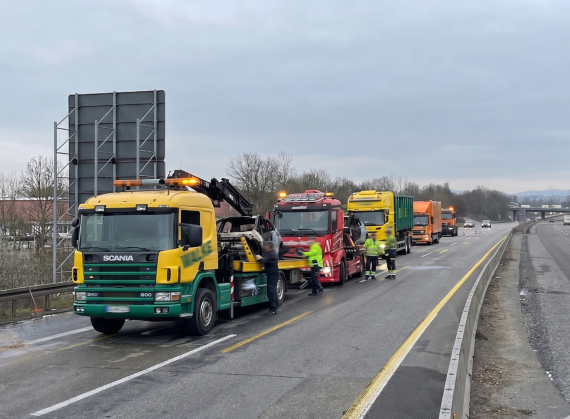 Truck Breakdown and Heavy Recovery in Germany: How Fleet Managers Can Control Towing, Recovery and Costs
 A truck breakdown in Germany is rarely just a technical problem. For fleet managers and dispatchers, it immediately creates a…
Read more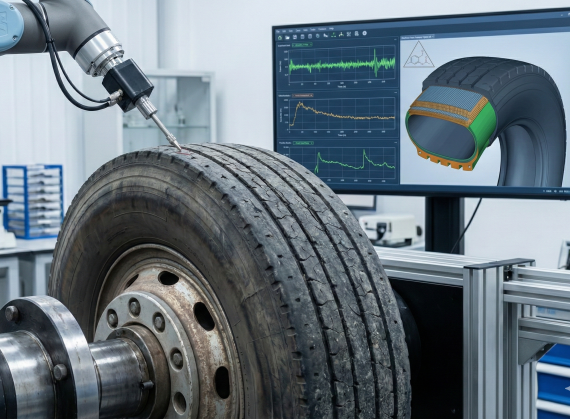 Thermodynamics and tribology of tyre aging: mechanisms of heat generation and structural degradation
 1. Introduction: the tyre as a thermodynamic systemA pneumatic tyre is a sophisticated composite structure designed to operate under extreme…
Read more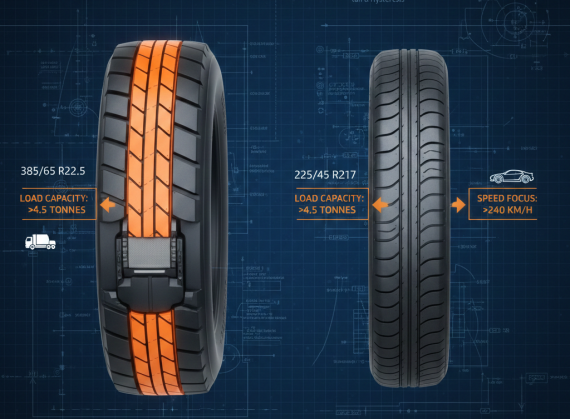 Truck vs Passenger Tyres: Structural Differences, Production Logic, and Regulatory Framework
 Physico-Chemical Foundation: the process mechanismthe operation of any pneumatic tyre is based on the phenomenon of hysteresis, which is a…
Read more